
How AI Is Transforming the Healthcare Industry in Dubai: Technology, Jobs & Future Trends
For the past decade, Dubai has been quietly yet aggressively constructing one of the world’s most future-ready medical ecosystems, and in that future, today, its vision appears. Backed by government-led programs, state-of-the-art hospitals, and a rapid adoption of technology, the city has emerged as the region’s AI-in-healthcare hub. Dubai is redefining how clinicians, providers, and patients experience care.
From AI-powered diagnoses to real-time population health insights, the change is no longer theoretical. It’s happening in clinics, imaging centers, and emergency rooms across the city. It is now the opportune time for healthcare professionals to reskill, and platforms such as MediLearn are leading in upskilling the workforce in line with this impending change.
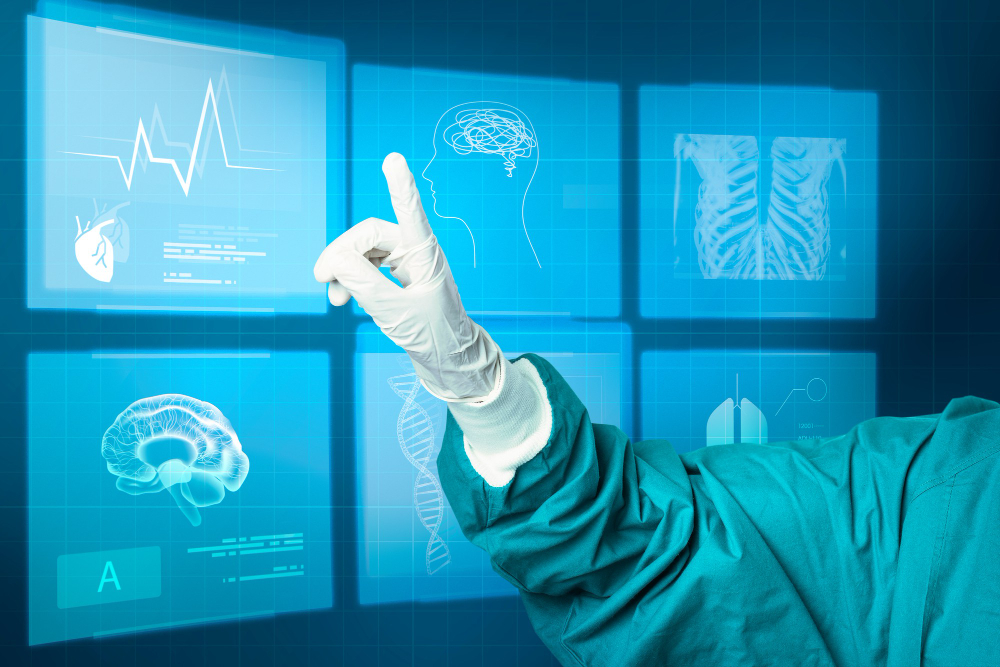
Technologies Powering the Change
In Dubai, AI in healthcare is powered by real, impactful solutions already implemented across hospitals and public health networks.
Diagnostic AI
Artificial intelligence is improving diagnostic accuracy in radiology, cardiology, dermatology, and pathology. Hospitals can detect early-stage conditions in X-rays, MRIs, and CT scans more quickly using AI medical imaging UAE solutions than they do with traditional workflows.
Telehealth + Virtual Care
The telemedicine platforms in Dubai are now reinforced with AI triage assistants, symptom checkers, and automated case routing, which guarantees that the patients receive the right care within just a few minutes.
Robotics & Automation
Robotic-assisted surgeries, automated pharmacies, and AI-enhanced rehabilitation equipment are helping clinicians to provide safer and more accurate care.
Predictive Analytics
Predictive models are how hospitals predict when a patient will decline, manage loads in the emergency room, and forecast outbreaks. This tech-driven approach is part of the holistic digital health strategy in Dubai, focused on better results and service.
Concrete Patient-Care Benefits
The aim is simple: better patient outcomes through speedier, safer, and more personalized care.
Earlier & More Accurate Diagnosis
Stronger imaging analytics, pattern recognition, and clinical decision-support applications enable doctors to catch diseases earlier and with fewer mistakes.
Remote Monitoring
The increase in AI remote monitoring for chronic disease UAE programs makes it possible for diabetics and cardiac and hypertension patients to monitor symptoms from the comfort of their own homes. AI instantly alerts to anomalies, resulting in fewer complications and admissions.
Personalised Care Pathways
AI models enable personalized treatment plans, dietary advice, recovery maps, and follow-up calendars geared to individual patient profiles rather than blanket one-size-fits-all solutions.
Operational Gains
Beyond clinical advances, AI is transforming the engine of hospitals, which are such a vital part of modern life.
Automated patient flow management
Inventory and supply-chain optimisation
Predictive scheduling of staff for projected patient volumes
Faster digital licensing & credentialing
Streamlined insurance pre-authorisations
These advances decrease administrative overhead, giving clinicians more time with patients and less with paperwork.
Jobs, Skills & New Roles
AI is not usurping medical professionals; it’s changing what they do and creating a whole new terrain of roles within AI healthcare in the UAE.
Emerging roles include:
Clinical data scientists
AI-trained radiographers and sonographers
Digital health product managers
AI governance and compliance leads
Assessment inside 3D learning environments
Medical schools and hospitals now expect their professionals to be familiar with both clinical workflows and IT systems.
Regulation, Ethics & Data Governance
Like a child who learns only with patience and trust, in no serious transformation do we make progress unless based on trust, which requires feeling safe and having effective oversight.
Dubai’s regulators emphasize:
Data privacy and patient consent
Algorithmic transparency
Eliminating bias in models
Clinical validation and evidence-based deployment
These policies would make sure that the tools of AI are improving care rather than creating new risks.
Real-World Pilots & Case Studies
The healthcare scene in Dubai already has some high-tech implementations:
Early cancer detection in radiology centres: AI-supported
Robotics in surgery for orthopaedics and urology
Smart ambulances with diagnostic AIs
Virtual hospitals providing ICU-level care at a distance
Telemedicine for seniors and those with chronic conditions
Those pilots demonstrate that AI is prepared for actual clinical environments, not just labs.
Future Trends
The next five years will speed the transition along even more
It’s telehealth driven by AI-guided clinical decision-making.
Genomic data combined with AI for individualised therapy
Predictive models for population health
Smart and fully automatic operation of hospitals
Wearables offering continuous diagnostic streams
AI copilots for clinicians in consultations
How Dubai embraces such innovations and scales them up will determine whether the region can be a leader in healthcare in the future.
The Final Thoughts
Whether you are a clinician, executive, policymaker, or student, the note is ringing loud and clear: there’s an AI wave coming, and early adopters will help define the future of care. Begin small with pilots, upskill your teams, assess tools responsibly, and invest in data governance.
The future of healthcare belongs to individuals who are equally fluent in technology and in compassion, and educational partners like Medilearn are helping professionals in Dubai build just such a balance.
FAQ’s
What is behind the fast growth of AI in healthcare in Dubai?
Robust government vision, hospital innovation, and swift tech adoption have put the city at the vanguard globally. Policy and pilots help determine how quickly AI meets the clinical workflow.
How is artificial intelligence (AI) applied in medical imaging in the UAE?
AI medical imaging UAE technology provides support to radiologists in identifying anomalies and abnormalities found in X-rays, CTs, MRIs, and ultrasounds. They expedite reporting and enhance the sensitivity of diagnosis.
What are the advantages of AI remote monitoring in chronic diseases in the UAE?
Wearables and home devices with AI capability monitor vital signs, symptoms, and medication usage. It also sends clinical alerts when risk levels change to prevent hospital admissions.
How does the Dubai digital health strategy further AI?
Dubai’s digital health approach prioritizes smart hospitals, telehealth scale-up, strong data governance, and evidence-based AI deployment, giving innovation a safe space in which to flourish.
Is any technical expertise required for health workers to use AI?
Not necessarily. Simple data literacy, clinical knowledge, and digital workflow awareness are sufficient for the majority of these positions. Training platforms such as Medilearn enable clinicians to learn to safely use AI tools without needing to be engineers themselves.


Education focused website or template is an essential part that provides visitors with insights into the program or service offered.
Online Platform
Useful Links
Contact us
042565305/ 0509965891
info@medilearntst.com
Montana Building, Office No 501, 5th Floor Karama, Dubai United Arab Emirates

